Having written about the history of York, in Chinese, in the last entry, I am going to focus more on the tourist attraction in York. York, despite being a forgotten city in modern times, has a relatively mature tourism industry. It's not a surprise given the city's world-class sights and scenic suburban area. Following my trail, you will learn more about what York has to offer.

I lived at a 14-bedded room at Ace York hotel over my 3 days and two nights' stay at York. It is not the best hotel you can find in York, but if you are travelling on a limited budget, this kind of hotel/hostel is definitely backpackers' best friend, satisfying all basic needs at a price almost half of a single-bedded room.


.jpg)
Enough of the living bit of York. Since my hostel is on one side of the River Ouse; and the city centre, where the major tourist attractions reside, is on the other side. So the first thing is to cross the river. There are several bridges linking the two sides of the River Ouse, I usually use Ouse Bridge (closer to my hostel), or Lendal Bridge (closer to the tourist information centre).


It's always advisable to visit the tourist information centre to check out the what's on and special offer before exploring any UK city.
 The TI at York is just on the Museum Street; off the Lendal Bridge, keep walking straight.
Loads of leaflets and booklets at your disposal.
It's one of the best thing travelling within the UK that the local council office usually arrange free guided tour by enthusiastic local guide. They don't charge, and they are definitely worth your time. You can check out the departure time and meeting spot at the tourist information centre (usually in the morning, extra trip in the afternoon for weekends).


Normally, there will be around 10 tourists in a group. (could be more in summer.)
In the guided tour, the local guide will show you around the major historical/tourist sites and tell you the history behind it. British people's passion for their own history is always fascinating.

St. Mary's Abbey
You'll learn about how William the Conqueror carried out the cruel "Harrowing of the North", and how his son Rufus built churches to repent for his father's deed; and how Henry VIII demolished the Catholic churches in the times of religious reformation, including the St. Mary's Abbey in York.

Monk Bar
You'll learn about how the Romans, the Saxons and the Normans built city walls to defend their cities. And what practical and symbolic meaning are embodied in the "bars" ( in York, "bar" means gate, "gate" means street) like this one (Monk Bar).
You'll also learn the namesake of the bar, like Monk Bar is so called because there used to be mongers avoid paying tariff, set up booth to sell their stuffs just outside the bar/city. "Mon" + "Bar" thus Monk Bar.

You'll walk the city wall with the group, and feel what it was like when the soldiers in those times performed their duties on these thick walls.

Different symbolic signs on the city walls showing the changing allegiance of the city.

The Shambles, and the little shambles, are the most medieval streets in York. Shambles derived from the word "shammell" meaning a butcher's cutting block, and yes the Shambles used to be a medieval butcher street.
Harry Potter's scene of Diagon Alley was filmed here!

The gate linking the Shambles and the Newgate Market (a market selling local produce/groceries).
You can see how narrow the "gate" is, that's the characteristic of "gate", narrow and short, linking between streets.

More of Diagon Alley the Shambles.
The street is really photogenic, epitomising the rest of York.
After the walk, it's time to off exploring myself. York has got its share of museums and they can keep you occupied for the whole day.

Yorkshire Museum. (in the Museum Garden, near the St. Mary's Abbey.)
Greeted by the Roman statue of the God Mars (God of War), Yorkshire museum tells you more about the history of York and showcases the many archaeology in the Roman and Medieval times. It's worth two hours of your stay in York.

The York Castle Museum. (used to be York Prison Building founded by William the Conqueror after the "Harrowing of the North").
Now it showcases best of Victorian era and a time tunnel history of York, even of the GB.

It was a good, sunny day the day I visited York Castle Museum. It's worth 4-5 hours of your time in there.

Just outside the York Castle Museum, there's Clifford's Tower, also founded by William the Conqueror. This tower further fortified the city of York at the time when Norman first came to England and Anglo-saxons still thought of rebelling against the invaders.

It's quite a long staircase. Good exercise before you can take a photo of the area, including a panoramic view of the York Castle Museum, from the vantage point.
You need to pay to go inside the tower, £4. I don't think the admission fee is worth its while, so I just climb the stairs and take photos from outside the tower.
Below shows some of York Castle Museum's collection.


A room in the Georgian time.
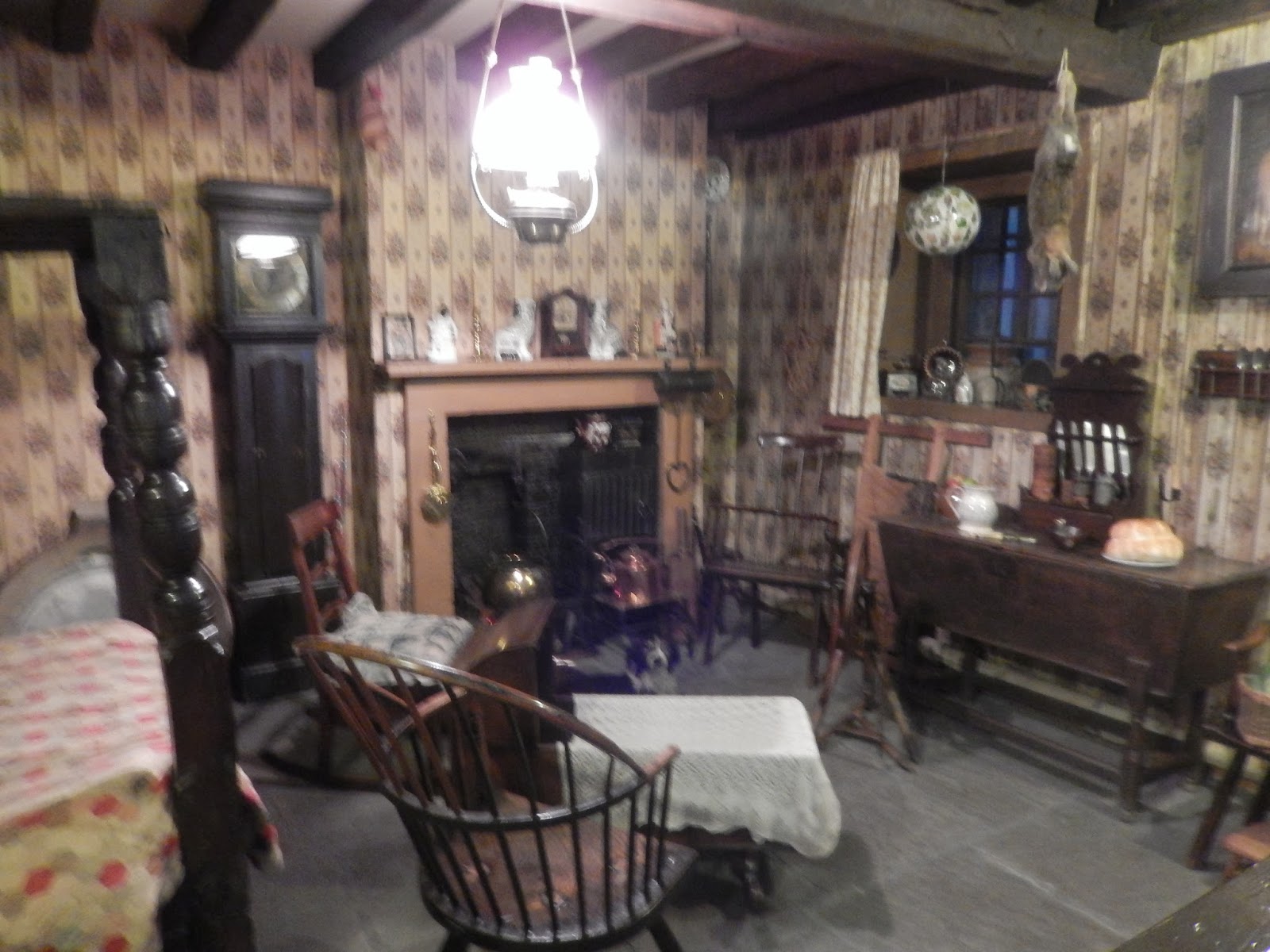
More room, I think it's around late middle ages.

It also shows British people's quest for a full collection of pottery utensil.

The Museum also has displays of more serious matter. Like this "Life and Death" session.
It fleshes out how British people celebrate life and death in different times.
This picture shows the black cloth Queen Victoria wear for three years in mourn for her husband's, Prince Albert's, death.

Some classy clock.

Kirkgate
This is one of my favorite in the museum, this is an reenactment of a street from Victorian era.
Definitely gives you the taste of how the 19th century street would look like.


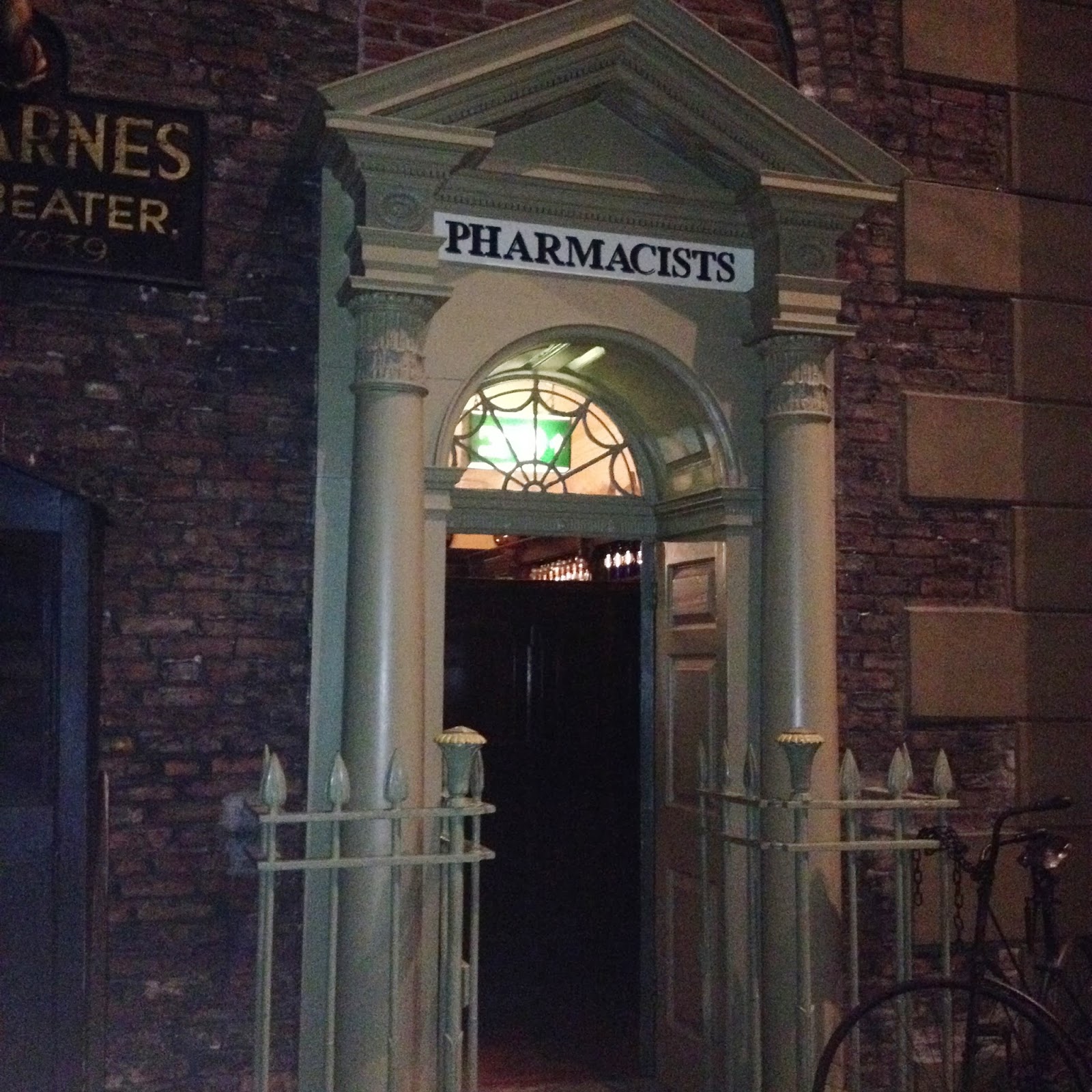
Pharmacy looks fancy.
Next stop is the York Minster. It is the biggest, in size, Gothic Church north of the Alps. Its earliest foundation could trace all the way back to Roman times, and it's also been through middle ages, and Norman times. It also has more stained glass window than the sum of the rest of the UK. UK's 70% of stained glass is on/in this very church. So it's a church very worth visiting, even if you are tired of church and all that because you have been in too many.


Guarded by the Roman emperor, Constantine I.
The first Catholic Roman Emperor, who was crowned emperor here in York. That's why the York people dedicated a statue to this particular Roman emperor.


The structure inside is amazing too. And it's echo is so good that when the priest makes announcement, he does sound somewhat more "godly", whatever that means.


A zoom-in of the roof net-structured top, it shows the roses symbols, symbolizing the merge of the houses of York and Lancaster. White in the middle and red in the background. (white rose represents house of York and red house of Lancaster.)


Being fit enough and paying extra, you can choose to climb the tower, which I did. The command view of York is worth the arduous climb and the money.


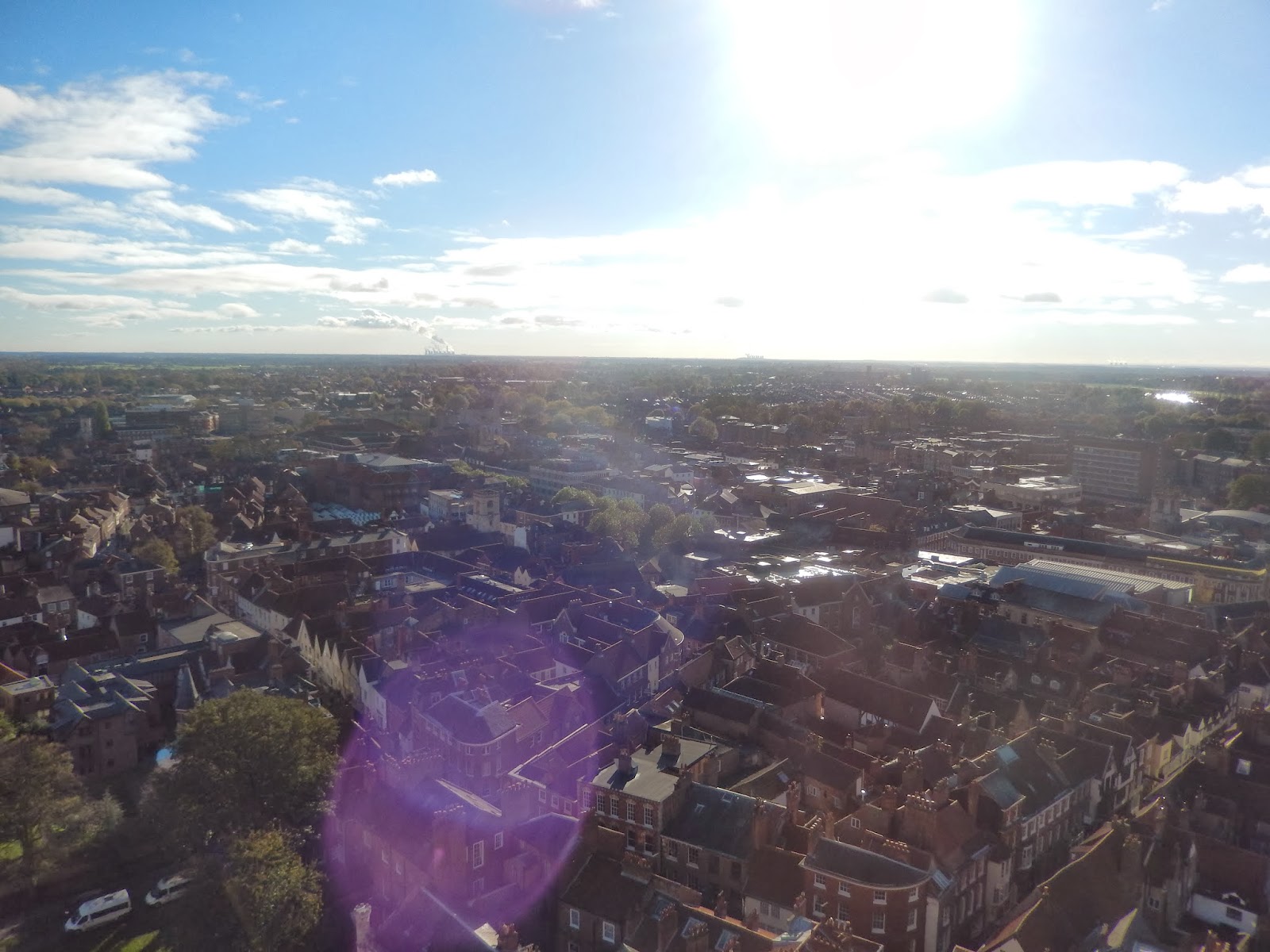


From the tower, I zoom close to the St. Mary's Abbey. It certainly looked much smaller from so high up, but thanks to my high power digital camera, still able to capture the abbey clearly. LOL


It's free to join and experience the minster in spiritual and musical action. You can even take the seat of a bishop, or even archbishop. LOL
I took the seat of a bishop, and enjoyed the harmonious evensong.


York also has its lovely theatre, the Theatre Royal. I went and watched a play, "Can't Stand up for Falling Down".
It's nice to end a day with a lovely play.


Had a cup of coffee, with lovely pattern on it.

Here's something I didn't do, but probably worth doing. The York city centre is not big and so walkable, but if you still want to save your energy, you can always board a hop-on-hop-off city bus, for bus tour with audio guide introducing the city.

And also make use of the city map. This one is at the Exhibition centre, just outside the Museum Garden.

The city map looks funny, it's animated.

Lastly, whilst travelling, don't forget to make friends. This is me and my friend Greg, who is from Canada. We enjoyed York.
This is my experience with York, I might have missed a thing or two here and there, but I think I've covered pretty much everything worth recommending of York, which is a lot. More of the photos of York will be posted on my facebook, feel free to check them out. This is a great trip, and a great start for my many more trips in the UK, and in Europe.
Next entry, I'll be writing about Bath, the history of it first again, probably in Chinese. Anyway Stay tuned ;).


